Sunshine Salmon

It was a beautiful Sunday in February and we enjoyed a relaxing lunch, outside in the sun – not bad for Portugal at this time of year!  Salmon, two ways, accompanied by pink Portuguese espumante – as good as any French variety.

My old favourite, in a circle, is raw salmon and smoked salmon, about 75gr of each, mixed with a little chopped onion and yoghurt to bind, plus a splash of lime or lemon juice, dill and salt and pepper to taste.  Then quickly salt some cucumber slices, rinse and lay at the bottom of a round mould, put the salmon mixture on top – and enjoy!  Serve with a blini or melba toast.

And I decided to try a new recipe, the salmon and sweetcorn mix courtesy of Chef Kiko, his book ‘Jantaradas Hoje e ca em Casa’, try his Lisbon restaurants……..  I decided to wrap the salmon in seaweed, but need a little more practice in the art of wrapping!

  • 150 gr fresh salmon, skinned and bone free
  • 1/2 tbsp grated ginger
  • 1/2 tsp sesame oil
  • 1 tbsp soy sauce
  • half a handful of freshly chopped coriander

Slice the salmon then cut into tiny cubes.  Put in a bowl and mix in the ginger, sesame oil, soy sauce and coriander.  Mix well.  Now make the salad.

  • 1/2 can sweet corn
  • 1/8th finely chopped red onion
  • 1/8th avocado pear in cubes
  • Juice of half a lime
  • 1/2 handful of freshly chopped coriander
  • 1/2 tsp sesame seeds
  • 1 tbsp olive oil
  • Salt to taste

Mix all together and season with salt to taste.  Chef Kiko suggests serving on lettuce leaves – equally delicious!


Iberian pork in the sun

February sun – just for one day – time to grab some Vitamin D and a pastry!

And to create a southern European meal for tonight.  I will use the Iberian pork loin which I bought a couple of weeks ago in Setubal market – living here it is important to stock up the freezer with quality meat but remember to use it, preferably, within a month of freezing.  I tried this Iberico pork fillet marinated with pimenton and accompanied by sauté potatoes out on a friend a couple of weeks ago and it was a great success.  The vital ingredient is that the pork, whether loin or fillet, comes from the Iberian black pig which is fed on acorns – this is not in any way similar to the white pig of northern Europe and, I feel, it is unfair to even call it by the same name!

Here is mine, in the marinade – look at the marbling and deep colour…..  This recipe is inspired by Jose Pizarro

  • 1 x 500gr Iberian pork loin or 2 x pork fillets
  • for the marinade
  • 1 tsp pimenton (Spanish sweet paprika)
  • 1 sprig fresh oregano – leaves chopped
  • 1 garlic clove chopped (if using Portuguese ones, make this 1/2 clove)
  • 1/2 tsp ground cumin

Mix together all the marinade ingredients and marinate for at least 12 hours – however, if you have a vacuum marinator (as I do) the time can be cut to 1 – 2 hours.

Preheat the oven to 200C. Take the pork from the marinade and rub with olive oil. Heat an ovenproof frying pan over a medium heat and, when hot, brown the pork on each side for 1 – 2 minutes.  Put the pan in the oven and cook for a further 30 minutes (for loin) and 15 minutes (for fillet).  With Iberian pork, it does not matter if it is slightly pink, in fact it should be but this is a matter of taste.  Leave to rest for 5 minutes and keep the pan juices.

  • 500 gr waxy potatoes, peeled and cut into 8mm thick slices
  • 1 tbsp olive oil
  • 1/2 small onion finely sliced
  • 1 garlic clove finely sliced
  • 2 sprigs fresh thyme, leaves only
  • salt & freshly ground black pepper

Boil the potato slices in salted water for 1 – 2 minutes until just tender.  Drain.  Heat the oil in a frying pan over medium heat and fry the potatoes for 2 – 3 minutes until just coloured.  Add the onion and garlic and fry for 1 to 2 minutes until golden brown.  Season to taste.

To serve, divide the potato between the plates, carve the fillet into slices and arrange on top.  Drizzle the pan juices over and add a splash of olive oil around the edge of each plate.  Garnish with thyme leaves.

And, if you like, add an English touch with a light cauliflower cheese – cook cauliflower until just tender, make a small amount of béchamel sauce flavoured with English mustard powder, pour the sauce over the cauliflower, sprinkle grated Cheddar cheese (or Parmesan or any hard cheese you fancy) over and pop in the oven until browned.

Chinese takeaway

After a day out in Lisbon, the last thing I feel like doing is cooking a meal.  The restaurants in the village all offer a ‘takeaway’ service, i.e. you choose a dish from their menu and they will pack it up to takeaway but for the time it takes, you might as well eat there.  I could order in advance, but I’m not that organised……  Takeaway lunches are easy – piripiri chicken, chips and salad from the little restaurant next to the petrol station.

IMG_1201
Fresh dumplings at home

So, we went to Martim Moniz – Lisbon’s Chinatown area – where there are several Chinese food shops, plus one Indian I know of, Popat Store,  which is very quirky selling the most old fashioned of English condiments amongst the spices, chillis and oriental vegetables.

My favourite is Supermercado Hua Ta Li, on the north side of Praca Martim Moniz.  It is full of all the fresh vegetables used in Chinese cooking at prices and quality that beat any supermarket, plus freezers full of Chinese delicacies and aromatics, including frozen lime leaves, galangal and coconut.  Of course it is also full of all the jars of Chinese spices, dried Chinese spices, an Aladdins cave of interesting ingredients.  Best of all they have cooked Chinese food – I admit that most of these are too ‘Chinese’ for my European palate (chicken feet etc.) but they sell crispy duck plus pork and vegetable dumplings.  Add these to Peking pancakes from the freezer and cucumber/spring onions from the fridge and I have a delicious Chinese takeaway!

IMG_1200
Crispy duck, ready to go

Mustn’t forget Supermercado Chen, on Rua Palma – probably the most famous of Lisbon’s Chinese food shops – full of more delicacies.  What you can’t find at Hua Ta Li will be here.

Pancake day!

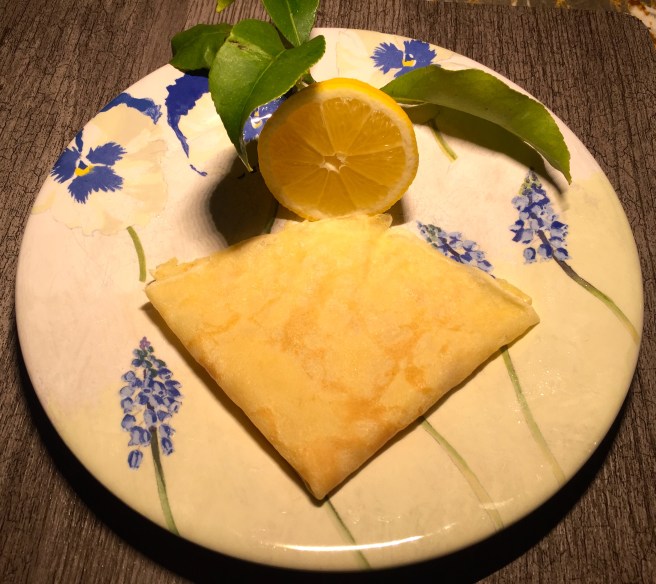
It’s a grey, damp and windy day here – feeling right at home to make the annual batch of pancakes.  My recipe is for French crepes, light and buttery, not heavy English style pancakes – accompanied by lemon, sugar and, maybe, strawberry jam….  Lemons come straight from our trees, unwaxed, organic and extremely juicy.

IMG_1194

This recipe is inspired by @AnneWillan, French Cookery School and makes approximately 18 pancakes :

125 gr flour
1/4 teaspoon salt
250 ml milk (make sure to get the fresh milk in Portugal, not long life)
3 eggs
2 tablespoon melted butter
100 gr clarified butter for frying

Sift the flour into a bowl, make a well in the centre and add the salt and half 
the milk.  Whisk in the flour to make a smooth batter.  Whisk in the eggs (do not beat the batter too much at this stage or the crepe will become tough).  Stir in 
the melted butter (but if resting the batter for any length of time, it is better to add this just before cooking) with half the remaining milk and let it stand for 1 - 2 hours.

IMG_1196
Silky, eggy batter

Just before using, add enough milk to make a batter the consistency of thin cream (note for those in Portugal, the flour is not the same strength as in the UK and I always find much less milk is needed – be careful). Add the melted butter if not already done. Then, just a little butter brushed in a crepe pan, add 2 -3 tablespoons of batter and cook over fairly high heat until browned and turn the pancake. The crepes are so buttery that you do not need to grease the pan before each one, just when they start to stick.

IMG_1198
Delicious …….

The best crepe pan I had was from E. Dehillerin in Paris, brilliant. cast iron, but it has disappeared and I have had to revert to a non-stick version which is nowhere near as good.  Just seen they have an online shop E. Dehillerin – maybe they can deliver to Portugal?

Hunting

That’s another Sunday morning with no lie-in!  Hunters shooting in the early hours.  What are they shooting at now?  From September to the beginning of December we know it is rabbits on a Sunday morning – a notice is, supposedly, distributed to everybody telling them to keep their dogs inside until 1pm.  A funny sight before this type of hunting is a tractor dropping off tomatoes for the rabbits to feed off…..  But at this time of year we do not hear the hunters dogs, so maybe they are looking for partridge – or is it flying birds?


You need a licence to hunt in Portugal and the rules are that it they are not allowed to shoot within 250 metres of a house/garden walls or within 500 metres of animals.  One Sunday during the rabbit season last year, I heard loud rock music playing close by – investigation was needed.  There, only 100 metres away from the house, 25 metres from the animals, was a lone hunter – on being questioned he said he could not see the animals???  So, a blind hunter with a gun maybe ………, probably keeping warm with the local firewater and playing music to frighten the rabbits out of their holes.

Only in Portugal (or maybe southern Europe).

Setubal in February

Strawberries ……….. fresh and local at Setubal market, delicious and definitely a smile maker.

IMG_1193
Strawberries in February

What else did I find in the market – fish, of course, a beautiful wild sea bass fresh from the sea – not farmed…..  Last year we found langoustine, just the once, wish they would reappear as they were delicious as carpaccio.  Also, a question I always have is, where around Lisbon can you buy fresh shellfish such as scallops?  All the restaurants have them, Galicia is full of them but I haven’t yet found anywhere to buy them.  Still researching that one.

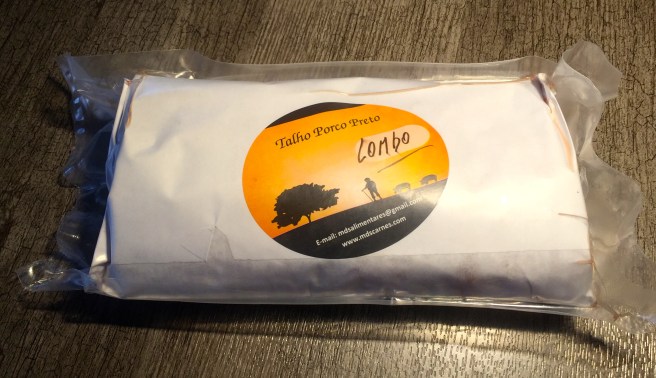
Next on to my current favourite butcher for beef and pork – Talho Porco Preto.  I never understood black pork until recently buying a loin from here, it was out of this world, not pork as you know it.  The beef in Portugal is from a younger cow and called vitela – they have vaca (old cow) but that is not what I like.  The best of the best is Vitela Barrosa, this is what they sell here – and look at how they package it for you.

IMG_1192
Loin of black pork to go

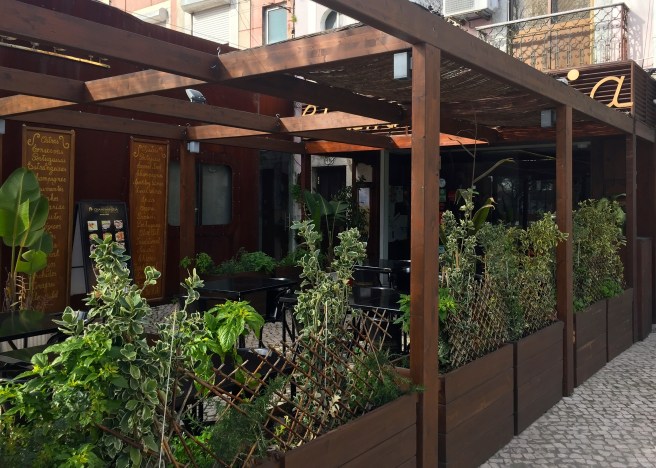
Finally, lunch.  We have had enough of the standard Setubal fare of grilled fish – yes, the quality of fish is excellent (usually, although some of the more unscrupulous restaurants, especially on the waterfront, will try to palm you off with the less fresh fish….).  Choco frito (fried cuttlefish) is the speciality but when you have it once…..  So we tried a little place that has just been added to the Michelin guide – A Champanheria – a lovely place with a Brazilian hint to it, specialises in oysters and tapas to start, then we had a delicious Moqueca de gambas with coconut rice.  Another good point was the suggestion that we had 4 tapas and 1 main course to share – just right for lunch.

IMG_1190
A Champanheria


Winter day

SONY DSC
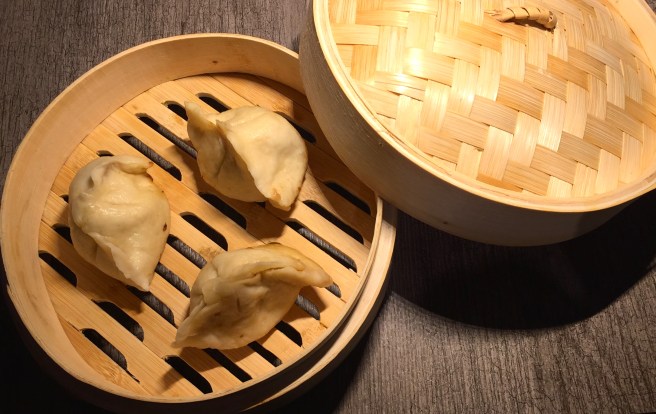
Winter sunrise, waking up to this beats February in the UK!  It is cool and misty, often foggy in the mornings.  Winter sunsets are the best too.  I was off to take pictures this morning, but the camera battery was flat from lack of use – now charged and ready to use.  A day at home, so Kung Po prawns and dumplings for supper – frozen prawns are just as good as fresh and dumplings from Supermercado Chen in Lisbon – brilliant!

UK to the Alentejo

This is the beginning of documenting the journey I made from a lifetime in Surrey to the Alentejo countryside nearly 8 years ago – a massive change of lifestyle which brought with it many surprises.  I have had to learn to live with not being able to communicate with the local people, the different produce in all shops and the difficulty in sourcing the fresh products I like to cook with, the restaurants in Alentejo and their idea of the ‘best food in the world’.  As you can tell, I am into cooking – and being able to cook my own food has helped me feel settled in an ‘alien’ environment.

So, I will now start to learn the art of blogging – let’s see how it goes!